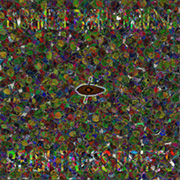
 Ensemble Pamplemousse: Brightness Drifts [Ensemble Pamplemousse]. Heard that name somewhere before and… well, this isn’t what I expected. Pamplemousse are the ensemble who recorded Andrew Greenwald’s A Thing Made Whole III a while back and it turns out they’re as much a composer collective as a chamber ensemble. I wasn’t counting on these four pieces being so perky, with an emphasis on electronics. Natacha Diels’ What Do You Want to See Today? is one of those existential reflections on “the modern condition” that plays out as an attention-deficient satirical romp but, as happens all too often in these cases, the light-touch irreverence borders on whimsy. Nevertheless, it’s one of the better examples, aided by the musicians’ rapid-fire timing, some genuinely striking effects and the composer’s nous to keep the material as semantically empty as possible to put the emphasis on nebulous unease rather than tempt fate by suggesting specific cause. David Broome’s Luminosity II (from the Hertzsprung-Russell Project) is also playfully frenetic, using photoelectric cells to trigger synth sounds and drum machine samples to produce aural stroboscopic effects. Either the cheesy instruments are subverted by the impartial manner of their disposition, or the technical interest in the piece’s stop-go flow is offset by the trivial synth patches, I’m not sure. Bryan Jacobs’ Envelope En En is the most successful of the electronicky pieces here, using modern day low tech to emulate the effects of early electronic high tech: sophisticated, complex textures and timbres are produced by the ensemble operating “chirp toys”. Not exactly sure what these are – Google suggests either a cat toy or a wine pourer – but evidently they are put to use here as pulse generators, bubbling along and buzzing around like a reincarnation of the glory days at Westdeutschen Rundfunk. Odd percussive noises and vocal sounds may or may not be from “field recordings”, but they all add to a quirky, exotic atmosphere that suggests a well-intentioned but incongruous attempt at recreating natural sounds. The sole acoustic work is of David Broome playing Andrew Greenwald’s piano piece Facets. Greenwald’s usual contested thickets of sound receive a necessarily cleaner and neater appearance when expressed on the keyboard: Broome sounds unnervingly precise in his rapid, scattershot bursts of notes that build up a portrtait of nervous energy, manic episodes counterpoised with tentative periods of studied inaction. Didn’t find a mention of this piece anywhere else on the web, so I think it’s either new, or else very old.
 Pareidolia: Far Away Worlds [Dissipatio]. Saw the cover and assumed it was one of those improv/fusion things I usually ignore but read the blurb and saw that this is a duo one half of which is Marta Zapparoli, so I’m interested. Quick recap: she works with radio waves, using various antennae and devices to intercept broadcasts and natural electromagnetic phenomena alike. Pareidolia pairs her with Liz Allbee, exponent of the quadraphonic trumpet – which is not as depicted in the cover art but an equally fantastic electroacoustic gizmo. It’s sort of like if you first heard a Jon Hassell record at someone’s party while on shrooms. As a pair, they’re all you’d hope they’d be and more. The album grabs your attention with the thunderous opening track in which Allbee makes full use of extreme pitch bends and amplification, gleefully matched by Zapparoli electrical spikes and manipulated static. The subsequent pieces are less interested in showing off and more about world-building, creating alien aural landscapes that are ripe with allusions and implications. You’d expect the wildness of Zapparoli’s earlier work in the medium to be tempered somewhat by the somewhat more tractable nature of Allbee’s beast and to a certain point it is, but the collaborative effort is channeled into establishing an overall tone through echoing sonar booms and crackling atmosphere. A science-fiction theme seems almost inevitable here and while the duo suggest retrofuturist overtones they never get cute about it. Nerdier listeners will appreciate the shortwave transmissions and that there’s a track titled “Number Stations”.
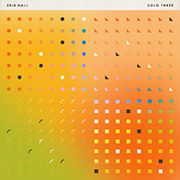 Erik Hall: Solo Three [Western Vinyl]. I sometimes wonder if certain musicians seek out novelty for the sake of it. Hall evidently has a vocation for arranging compositions for multi-tracked keyboards and guitars, then performing all the parts himself. As the title advises, he has two previous albums in this vein, tackling Steve Reich’s Music for 18 Musicians and Simeon ten Holt’s Canto Ostinato, neither of which I wish to hear albeit for differing reasons. This third effort follows the same compositional thrust but appears more palatable as it’s made up of shorter pieces by four different composers. He begins with Glenn Branca, perversely selecting one of his orchestral scores for the guitar/keyboard treatment; his take on the opening movement of The World Upside Down must be the gentlest Branca ever committed to disc, even as the source is relatively mild itself as far as Branca goes. Charlemagne Palestine’s Strumming Music is domesticated to a tidy fifteen-minute essay, with the overdubbed harmonic ramifications sounding decorative more than organic and the monadic form of the piece stripped of its obsessive forcefulness. There seems to be potential in a human interpretation of Laurie Spiegel’s A Folk Study, one of her pioneering works in digital synthesis and sequencing, but Hall sticks to keyboards and produces an interpretation that seems faithful but lacks the incongruity of the original. I was just wishing this piece used strings instead. By contrast, his version of Steve Reich’s Music for a Large Ensemble is unusually effective, taking advantage of a reduced palette of instrumental sounds to produce something crisp and propulsive out of Reich’s busy polyphony, with enough substance in the writing to stop it from coming across as trivial. It’s the one piece here which does let you hear the music afresh.
Filed under: Music, Reviews by Ben.H
Tags: Andrew Greenwald, Bryan Jacobs, Charlemagne Palestine, David Broome, Ensemble Pamplemousse, Erik Hall, Glenn Branca, Laurie Spiegel, Liz Allbee, Marta Zapparoli, Natacha Diels, Pareidolia, Steve Reich
No Comments »
Listening In: Opstad, Toraman
Saturday 25 April 2026
 James Opstad: Drift [Another Timbre]. I knew the name James Opstad from his frequent appearances as a double bass player with Apartment House on numerous Another Timbre albums, but didn’t realise he’s also a composer. None of the five pieces on Drift use bass, so I can’t help listening with one ear open for what makes him tick as a musician. Nymphaea is a duet for piano and vibraphone composed in 2020, composed for and played here by the eminently capable GBSR duo of Siwan Rhys and George Barton. It seems simple, with antiphonal exchange of chords between the two intruments, sometimes changing, sometimes not, sometimes matching, sometimes not – this movement is sufficient to produce an elusive delicacy, with GBSR’s tactile use of dynamics making music that avoids lapsing into a cycling of processes. The idea of cycles lurks behind all of these pieces, never exactly audible but suggested or at least implied. The two short Studies for string quartet, played by the musicians of Apartment House, unfold like canons and they probably are, of a sort, having read the accompanying interview with the composer. Opstad uses forms of mensuration so that the instrumental voices move independently in their own time, echoing each other without forming a consciously recognisable pattern – a haunting hall-of-mirrors effect. This comes out even more strongly in the longest and most recent work, Drift itself. It started as another duet for GBSR, but then Opstad added a clarinet part, again played by Roche. Roche’s part adds small, wistful lyrical commentary to Rhys’ spiralling, labyrinthine piano continuo, augmented by Barton on low woodblocks. The piano part resembles some of Bryn Harrison’s pieces in the eating-its-own-tail aesthetic, but each musician follows their own little circular trajectory, always sounding the same while never quite being the same. It takes a while to seep in that the piece is gradually slowing down, both lower and slower, prolonging time in a Clementi (A.) dreamlike state. The oldest piece here is Eluvium from 2018, showing Opstad’s interest in live electronics. Clarinettist Heather Roche weaves together lines in higher and lower registers, fed through a time delay and played back into the room. A tam-tam hung in the room acts as a resonator, filtering and reinforcing certain overtones. A halo of pure tones gradually enhances and then engulfs the clarinet and I’m sure towards the end Roche has stopped playing altogether, leaving only the enduring resonant waves to wind around each other. It’s an uncanny effect, drawing from techniques used by Lucier and Tenney but given its own poignancy by the initial quiet lyricism which takes on a transformative purposefulness.
 Zeynep Toraman: a lifetime of annotations [Sawyer Editions]. No foreknowledge of Toraman or her work, and Sawyer make a habit of keeping their sleeve notes terse. I was originally going to pass on reviewing this because at first it sounded like more of the same, although the same what I’m not sure of exactly. Two works for small groups of strings, each using faint bowing of slow, elongated tones. Regular readers will get a familiar feeling. It may share a common style, but there is something distinctive in the way Toraman works and puts her pieces together. The String Trio: a lifetime of annotations omits viola for two violins and cello; played by veterans Clara Levy, Biliana Voutsckova and Judith Hamann, they take a melodic line and extend it for half an hour, multiplying it with some unexpected harmonies to create a diffuse counterpoint that emerges and evolves throughout the piece, starting out somewhat remote but settling into a pensive mood. Slow Poem (v.2) is a duet for violin and viola performed by andPlay, the duo of Maya Bennardo and Hannah Levinson previously heard playing Catherine Lamb and Kristofer Svensson. As you may expect, it’s a bit more astringent without the cello’s range, made moreso by their frequent use of very high harmonics, but it doesn’t become abrasive. What makes this piece is a sensitive combination of composition, interpretation and recording that makes the frailness of the sounds intimate, for music that is vulnerable instead of affected and aloof. Even as the sounds become thinner towards the end, they seem more settled than in the more fully-voiced opening.
Filed under: Music, Reviews by Ben.H
Tags: James Opstad, Zeynep Toraman
No Comments »
The Many Hands of John White
Sunday 19 April 2026
John White would be ninety this year, had he not died in 2024. There was a large concert that year to celebrate his life and work, but there is still much to celebrate and more yet that has been so far overlooked. Music We’d Like To Hear began its extended twenty-first season with a concert dedicated to White yesterday which demonstrated both of these aspects. As a pre-concert event, Tim Parkinson gave the premiere of White’s Piano Sonata No. 47 from 1969. Relatively longer than most of his 179 other sonatas, it’s a spacious work that “quietens the mind” in the Cagean sense, although the lean but unyielding structure bears a closer relationship to Christian Wolff. Mixing single notes and chords harmonising the upper leading voice, the piece moved slowly in a largely stepwise way with occasional displacements, the extended duration creating a sort of slow-motion long line of melody. Strange how you could tell it was over.
The concert itself featured performances by frequent White collaborator Christopher Hobbs with Dave Smith on piano. Most of the works were duets for piano four hands, with Smith pairing with Mary Dullea, Rob Grassie, Mark Viner and Hobbs. The piano duets were mostly written in the mid-1970s and tended to be all of a similar style, reflecting White’s interest in the Romantics and in theatre music. The programme notes describe these as non-system works, as opposed to the pieces for which he remains best known, but traces of machinery could still be heard here, both in his fondness for sequences, applied meticulously or haphazardly, and the salon-cum-player piano approach that Smith et al. took to interpreting this self-consciously anachronistic music. There’s a bone-dry humour at work in these pieces if you’re looking for it, mostly in their form, either cutting off the romanticist rhetoric in mid-flow or extending it until it verges on bluster. The English reticence at play here also ensures the seductive effects are blunted. This would all appear to be a way for White to have his cake and eat it, and an evening’s worth of the stuff did start to play on the nerves.
To break things up, Hobbs and Ian Gardiner played a couple of White’s machine pieces for untuned percussion. Yet Another Exercise and Photo-Finish Machine both date from 1972 and use irregular patterns of sounded and unsounded events to produce fleeting, elusive textures out of a game-like situation. Tammas Slater gave the early Toccata for Organ (from 1961) a rendition on the St Mary At Hill instrument, the first airing of this piece in about, oh, sixty-five years or so. It’s a lively, exuberant work, composed to show off the pipes of the newly-commisioned organ at Guildford Cathedral. There were also surprise items not announced in the programme: Smith and Hobbs performing a piano arrangement of Nordic Reverie, and a newly-discovered work from 2019 dedicated to John Tilbury, adapting material from Rossini’s Sins of Old Age into a sly, quasi-obsessive indulgence.
Filed under: Music, Reviews by Ben.H
Tags: John White
No Comments »
Getting in the groove: Houben & Roeles, Ahti
Thursday 16 April 2026
 Eva-Maria Houben & Harmjan Roeles: given [Sawyer Editions]. The last time I reviewed something by Houben I called her composition style as “on the cusp between just-enough and not-enough”, but her collaborations can often go in unexpected directions. In given, she plays a neat little portable pipe organ as part of a trio with Harmjan Roeles on double bass and the producer Roeland van Niele – yes, they describe their practice as involving all three. I don’t see any recording venue or dates on this album so the circumstances of the perfmormance(s) heard here are for conjecture, but the sleeve notes refer to it as an “exercise in breathing”, presumably with the producer providing outsourced mindfulness. In the first part they are susceptible to mood swings, with Roeles’ bass growling in the lowest registers while Houben’s organ is unsettled and flighty, with occasional florid outbursts. They gradually centre themselves, until by the end of the first part and throughout the remaining two they achieve near-immobility. The two musicians occupy a strange space in which timbre and pitch start to blur into a single quality, making as little overt action as necessary to produce sounds in which bow on string matches air through pipes, clear tone meshes with overtones. While working their way down to almost nothing, they never lapse into stasis; rather they feel their way through the piece moment by moment. Lasting over an hour, they seem to achieve a reductive endpoint by about a third of the way through, yet by extending far beyond this apparent limit they keep finding new places to explore with increasing attention and refinement.
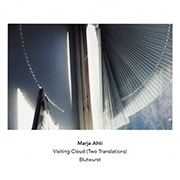 Marja Ahti: Visiting Cloud (Two Translations) [Another Timbre]. This is the first solo work by Ahti that I’ve reviewed, and it consists of two electroacoustic compositions from around 2019-20 that were repurposed for the all-acoustic Blutwurst ensemble, featuring Cristina Abati, Marco Baldini, Luisa Santacesaria et al. Laurence Binyon’s aphorism “slowness is beauty” is the watchword here: these new arrangements are about twenty minutes each, somewhere between two to three times longer than the originals. Which I haven’t heard, so I can’t make comments on the tempo. What I do hear is that Chora is stately and sumptuous, rendered as a slow series of chords that gradually fill out an existing harmonic idea rather than follow any form of development or process. The ensemble plays viola, trumpet, cello and double bass, bass clarinet, accordion and harmonium, offering a rich palette of sounds from relatively small forces. In Fluctuating Streams the progression is more linear, starting with unvoiced sounds that slowly morph into monotones, then begin to take on simple harmonisations. Once again, Ahti and Blutwurst prefer not to build up but to detail a single musical image, reaching a certain stage of completeness and then examining its effects at length, creating a piece with a strangely sinuous aspect to its languor.
Filed under: Music, Reviews by Ben.H
Tags: Eva-Maria Houben, Harmjan Roeles, Marja Ahti
No Comments »
Lance Austin Olsen: new compositions
Saturday 11 April 2026
 Lance Austin Olsen: Death In The Urban Jungle [Confront]. Before I get to the new stuff, let’s backtrack to last year to see where Olsen is coming from now. For many years, the painter/composer has been producing haunted sound collages, combining instruments, amplified objects and old recordings in a symbiotic relationship with his paintings, either complementing or taking direct compositional knowledge from them. The mood is often dark, and these new pieces have stripped back the former complexity of the collage texture to produce music of greater starkness. Death In The Urban Jungle begins with an emphasis on timbre over any particular mood, with strange, synthesised-sounding textures dominating in an unusual way, quite unlike his previous work. (The principal instruments listed here are amplified copper plate, shruti box, guitar, bamboo flute, found tapes.) The work falls into a series of scenes, separated by silences. As it progresses, each scene settles into slow ostinati of unidentifiable sounds which establish their presence and then recede. The introduction of identifiably musical source material in the later stages of the piece seems all the more alienating and ominous when heard in this context.
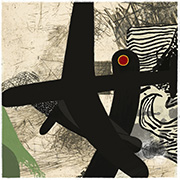 Lance Austin Olsen: Fascist Cockroaches Over Canada Meet The Resistance [Somnimage]. This is a shorter work made for Somnimage’s unknown territory series, coupled with a digital print of one of Olsen’s visual works. Olsen plays solo on amplified acoustic guitar, raw and uncultured, surrounded by extraneous sounds of scraped and rubbed objects, with an added sample as a sting in the tail to add a pointed reference to place and time. The tone is unmistakeable (see title) but doesn’t stoop to propaganda, locating its grievances in its attitude instead of elevating and restricting to a particular set of circumstances. In some ways this is the theme of the piece, as the ills of the world are ever-present, changing only in appearance and in place.
 Jamie Drouin & Lance Austin Olsen: a field far beyond form and emptiness [Infrequency Editions]. Time flies, and this is apparently the first album put out by Olsen and likeminded long-time collaborator Drouin in six years. Again, there’s a newfound starkness in their approach here, even as their work together is more ambivalent and neutral in tone than the portents of Olsen’s solo work. Besides the old radios and found tapes, there’s a particular focus on capital-I Instruments here, even if amplified: cello, guitars, dulcimer and piano predominate. It’s a strikingly pointillistic work, with acoustic phenomenon placed front and centre in clear relief. Elements of collage and found sounds are still present but used sparingly, adding inflection points to the surface. Silence is always present, either through implication in the sparseness of the sounds and the low dynamics throughout, or the extended pauses which separates the work into chapters. It’s both the strangest and the most conventional work I’ve heard by the duo; an extended composition of endurance and restraint which is never passive or fully at rest, even in its most subdued moments.
Filed under: Music, Reviews by Ben.H
Tags: Jamie Drouin, Lance Austin Olsen
No Comments »
Parkinson Lee
Monday 6 April 2026
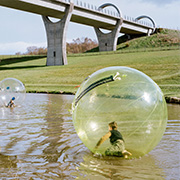 Tim Parkinson: The Projects [untitledwebsite]. I had something smart to say here but I forgot it so I’ll start over. I think I’ve previously described Parkinson’s music as acting like a non-sequitur to something never said. The four pieces presented on The Projects are all very different but try to convince you that they’re all alike. Siwan Rhys neatly trips through the piano piece untitled 2021a in a way that at first reminds of Christian Wolff’s later music, but the tonal language used here is less rarefied and deceptively sophisticated. Rhys spins the piece with a jazzy, insouciant breeziness that suddenly pulls up short at unexpected moments. The following pieces find other ways of being lulling and nagging simultaneously, leaving everything momentarily balanced but still unstable. Project 3 is a duet between Travis Just on saxophone and Parkinson on a motley assortment of keyboards. Across five movements Just plays two- or one-note riffs over obtuse, wandering keyboard lines and low-tech drum machines, with the sax managing to sound as affectless as a free MIDI instrument patch. The po-faced directness starts to accumulate arbitraty collisions between the instruments until it all ends on the verge of chaos; an even-tempered chaos, but still. Parkinson’s keyboards double piano and MIDI piano on the solo piece untitled 2021b, which seems to follow some sequence or process that chases its own tail, looping through harmonic circles while counting down to a preordained endpoint. Skipping ahead to Project 9000, we hear something that sounds programmatic but is entirely baffling. Rhys returns to bang out sporadic piano clusters, eventually joined by percussionist George Barton on various tasks of musical carpentry, all while Parkinson grandiloquently rhapsodises on an otherworldly Mighty Wurlitzer. It’s enough to make Kagel scratch his head. I don’t want to trivialise this album by asserting there’s a point to it all, but nevertheless Parkinson presses upon our assumptions and our anxieties that subconsciously play out when we listen to music, digging into the cognitive dissonances of misapplied logic that can amuse or frustrate us, to instill responses in the listener that are complex and strongly personal.
 Okkyung Lee: just like any other day (어느날): background music for your mundane activities [Shelter Press]. Okkyung Lee dispenses with the cello and makes an album entirely of home recordings with electronic keyboards, computer and a cheap cassettee recorder. Ten pieces that are gnomic but fully realised. The setting and pervading mood of comforting melancholy recalls the convalescent feeling produced by the “lockdown aesthetic” of a few years ago, but the music here is more definite and complete. The keyboards hearken back to the clean synth sounds of the early 1980s, here brightly coloured but not strident, mellowed by a soft VHS burr of nostalgia. The slightly lo-fi sounds evoke the domestic form of techno-optimism from that period, when home computers were new and suggested boundless potential, simultaneously futuristic and quaint. Each of the ten tracks evokes a mood while also suggesting a quiet wit operating behind its pithiness. I mentally bracketed it with Tim Parkinson because it seems to share the peculiar combination of being friendly but aloof. The pieces are charming and seemingly trivial, too candid to be ambient, too obliging to be musique d’ameublement, but as with The Projects this music has an oblique way of acting on the senses.