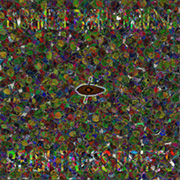
 Ensemble Pamplemousse: Brightness Drifts [Ensemble Pamplemousse]. Heard that name somewhere before and… well, this isn’t what I expected. Pamplemousse are the ensemble who recorded Andrew Greenwald’s A Thing Made Whole III a while back and it turns out they’re as much a composer collective as a chamber ensemble. I wasn’t counting on these four pieces being so perky, with an emphasis on electronics. Natacha Diels’ What Do You Want to See Today? is one of those existential reflections on “the modern condition” that plays out as an attention-deficient satirical romp but, as happens all too often in these cases, the light-touch irreverence borders on whimsy. Nevertheless, it’s one of the better examples, aided by the musicians’ rapid-fire timing, some genuinely striking effects and the composer’s nous to keep the material as semantically empty as possible to put the emphasis on nebulous unease rather than tempt fate by suggesting specific cause. David Broome’s Luminosity II (from the Hertzsprung-Russell Project) is also playfully frenetic, using photoelectric cells to trigger synth sounds and drum machine samples to produce aural stroboscopic effects. Either the cheesy instruments are subverted by the impartial manner of their disposition, or the technical interest in the piece’s stop-go flow is offset by the trivial synth patches, I’m not sure. Bryan Jacobs’ Envelope En En is the most successful of the electronicky pieces here, using modern day low tech to emulate the effects of early electronic high tech: sophisticated, complex textures and timbres are produced by the ensemble operating “chirp toys”. Not exactly sure what these are – Google suggests either a cat toy or a wine pourer – but evidently they are put to use here as pulse generators, bubbling along and buzzing around like a reincarnation of the glory days at Westdeutschen Rundfunk. Odd percussive noises and vocal sounds may or may not be from “field recordings”, but they all add to a quirky, exotic atmosphere that suggests a well-intentioned but incongruous attempt at recreating natural sounds. The sole acoustic work is of David Broome playing Andrew Greenwald’s piano piece Facets. Greenwald’s usual contested thickets of sound receive a necessarily cleaner and neater appearance when expressed on the keyboard: Broome sounds unnervingly precise in his rapid, scattershot bursts of notes that build up a portrtait of nervous energy, manic episodes counterpoised with tentative periods of studied inaction. Didn’t find a mention of this piece anywhere else on the web, so I think it’s either new, or else very old.
 Pareidolia: Far Away Worlds [Dissipatio]. Saw the cover and assumed it was one of those improv/fusion things I usually ignore but read the blurb and saw that this is a duo one half of which is Marta Zapparoli, so I’m interested. Quick recap: she works with radio waves, using various antennae and devices to intercept broadcasts and natural electromagnetic phenomena alike. Pareidolia pairs her with Liz Allbee, exponent of the quadraphonic trumpet – which is not as depicted in the cover art but an equally fantastic electroacoustic gizmo. It’s sort of like if you first heard a Jon Hassell record at someone’s party while on shrooms. As a pair, they’re all you’d hope they’d be and more. The album grabs your attention with the thunderous opening track in which Allbee makes full use of extreme pitch bends and amplification, gleefully matched by Zapparoli electrical spikes and manipulated static. The subsequent pieces are less interested in showing off and more about world-building, creating alien aural landscapes that are ripe with allusions and implications. You’d expect the wildness of Zapparoli’s earlier work in the medium to be tempered somewhat by the somewhat more tractable nature of Allbee’s beast and to a certain point it is, but the collaborative effort is channeled into establishing an overall tone through echoing sonar booms and crackling atmosphere. A science-fiction theme seems almost inevitable here and while the duo suggest retrofuturist overtones they never get cute about it. Nerdier listeners will appreciate the shortwave transmissions and that there’s a track titled “Number Stations”.
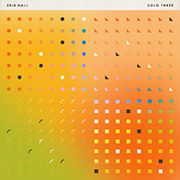 Erik Hall: Solo Three [Western Vinyl]. I sometimes wonder if certain musicians seek out novelty for the sake of it. Hall evidently has a vocation for arranging compositions for multi-tracked keyboards and guitars, then performing all the parts himself. As the title advises, he has two previous albums in this vein, tackling Steve Reich’s Music for 18 Musicians and Simeon ten Holt’s Canto Ostinato, neither of which I wish to hear albeit for differing reasons. This third effort follows the same compositional thrust but appears more palatable as it’s made up of shorter pieces by four different composers. He begins with Glenn Branca, perversely selecting one of his orchestral scores for the guitar/keyboard treatment; his take on the opening movement of The World Upside Down must be the gentlest Branca ever committed to disc, even as the source is relatively mild itself as far as Branca goes. Charlemagne Palestine’s Strumming Music is domesticated to a tidy fifteen-minute essay, with the overdubbed harmonic ramifications sounding decorative more than organic and the monadic form of the piece stripped of its obsessive forcefulness. There seems to be potential in a human interpretation of Laurie Spiegel’s A Folk Study, one of her pioneering works in digital synthesis and sequencing, but Hall sticks to keyboards and produces an interpretation that seems faithful but lacks the incongruity of the original. I was just wishing this piece used strings instead. By contrast, his version of Steve Reich’s Music for a Large Ensemble is unusually effective, taking advantage of a reduced palette of instrumental sounds to produce something crisp and propulsive out of Reich’s busy polyphony, with enough substance in the writing to stop it from coming across as trivial. It’s the one piece here which does let you hear the music afresh.