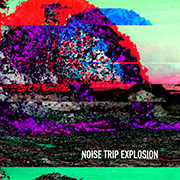
 Nolan Hildebrand: Noise Trip Explosion [Redshift]. The five compositions presented here sound like pure anarchy, so I like it; they seem to just happen rather than follow any organisation or pattern, which is good. They’re all electroacoustic works, so Hildebrand – working with liver mixer feedback, data-generated noise and interactive electronics – and his acoustic musicians are all to be commended for the unbridled anal expulsiveness they display as they whip up one huge sonic mess after another. There’s a perverse glee to their noisemaking as they try to be as grating, abrasive and hyperactive as possible and the pleasure is infectious, in a way that is so often promised by the hip kids but seldom delivered. Hildebrand as a composer appears to see his task as goading the musicians into fresh extremes as much as setting any parameters or restraints for them. For nearly an hour, nothing pauses for breath or takes so much as a moment to look back on what havoc has been wrought, it just relentlessly plunges forward at full tilt. It’s exhausting, but in a satisfying way, and yes you will listen all the way through. Strike another blow against the myth of Canadians being polite.
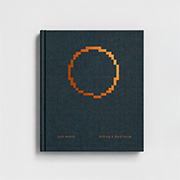 Josh Mason: Kicking A Dark Horse [Greyfade]. The latest in Greyfade’s folio series, which combines an album with a hardcover book. The nine tracks were composed on modular synthesizers fed into digital data processors, exploiting the mismatches between the two systems to create distortions, errors and discrepancies (see cover art). The book is a free-form, fragmentary collage of poetry and diary that makes for “a nonlinear travelogue of the states [sic] of Florida”. The two are intended to form an emergent artwork, each illuminating the other – discontinuity something something simulacra etc. – which will take more time to see how it pans out, so I’ll focus on the music. Warm analogue sounds warped by electronic artefacts, with a cool ambient vibe throughout. Old heads will immediately hark back to the fin de siècle avatars of Oval and Pole, and this music seems to combine the sound of both: nervous stutters and crackling tension over an impassive surface. Mason comes by this sound honestly, detailing how it’s the result of working with unfamiliar and recalcitrant equipment to achieve a serendipitous travesty. He keeps the drama implicit, anticipated rather than felt, which enhances the wary mood maintained throughout. They’re evocative but ambiguous landscapes, or rather, keeping with the concept and the fin de siècle fashion, a soundtrack to the book.
 Hunter Brown: Stoppages Vol. 3 [Party Perfect!!!]. I was all stoked about Brown’s Stoppages Vol. 1 [∞] and then skipped Vol. 2, so here’s me getting stoked all over again over Vol. 3. Like I said last time, Brown takes a David Tudor-like approach to glitch, interrogating the principle upon which the digital error operates and then applying it as a compositional method. The effect is transcendent. On this outing, he exploits the noise floor algorithms used in audio systems to distinguish signal from background noise; by reducing the audio level until it merges with the background, the system merges the two into a hybrid data bit. The results then have to be cranked up again to make them audible. For source material, Hunt subjects tracks from the two previous volumes to this process, creating pieces somewhere between variation and trope. It’s less immediate in brute force than Vol. 1, but more complex and sophisticated in its intricate sounds while equally rigorous in its conception and execution, with a concomitant inscrutable logic in structure and form. Why didn’t I mention Vol. 2 until now? Because I lost my copy. Guess I’ll have to go get it again.
 Laurent Güdel: State Music [Insub]. There’s a book with this one, too. Güdel has toured the venerable bastions of electronic music – EMS Stockholm, Columbia University, etc. – and produced a disquisition on the relationships between cultural and political power located inside 20th Century institutions dedicated to music research. It’s an exercise in poking through the leftovers of history, with the six pieces presented here composed on location on vintage Buchlas, Serges and EMS Synthis. The essay follows suit, raking over the past with an (ironically, academically popular) ethnocentric assumption that the Cold War was created in a vacuum and fought entirely on one side. It’s light on the pseudo-Marxist analysis and more of a verbal conspiracy board, using vague syntax to assert a link between synthesisers and fascism, eugenics and other maladies including, inevitably, the Jewish Menace. With chapter titles like “Vladimir Ussachevsky: Agent and Target of US Imperialism” it recalls pleasant memories of the shitkicking the American avant-garde got up to in the 70s with varying degrees of earnestness. The music? It’s strange, and for the most part unlikeable, possibly by design. Each piece gathers a wide array of timbres, textures and effects and throws them together one after another as though Güdel is impatient or dissatisfied, making each piece sound more like a demonstration reel for the instrument than actual music. The exception is the last piece, made on the non-functional RCA Mark II synthesizer, which Güdel uses as a resonator, antenna and resistor to transform field recordings and ambient sound. It’s a transformative work which shows creativity and insight into the relationship between sound and technology in a way that is not evident in the preceding tracks.
Filed under: Music, Reviews by Ben.H
Tags: Hunter Brown, Josh Mason, Laurent Güdel, Nolan Hildebrand
No Comments »
Troubled Quiescence
Sunday 5 July 2026
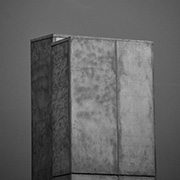 Conner Simmons: any sense of where we were gone [Sawyer Editions]. A floaty, mild-tempered expanse of soft – but not always gentle – sounds; curiously, the free-form feeling gains from being sorted into a modular structure of five compositions: two string quartets to open and close, with a larger central work for unspecified instruments, which in this case is a larger ensemble including voice. The three pieces are unified into a single work by two short interludes for bowed prepared piano, composed a year later but also apparently heard as a whole from the first performance, which is the recording presented here. There are fairly subtle electronic treatments throughout, designed to emphasise lingering tones and after-images. The outer quartets are marked by a lack of movement, with most of the changes coming from a small amount of harmonic expansion and some ramping of dynamics. In the central piece, titled explain it to itself as wind, the improvisation allowed to the musicians emerges slowly, tentatively, each producing sounds individually that take care not to coalesce into a single image, for listening in the moment as opposed to coming away with a clear impression. Simmons alludes to all the pieces drawing upon “postmodern fiction, obscure geometry textbooks, and poems about time” and quotes from Cortazar’s Hopscotch; in short, it’s a synthesis, albeit one that steers clear of Delibes and Saint-Saëns, not to mention Rose Bob and Alix Alix.
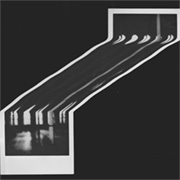 Wilson Tanner Smith: Perpetual Guest [Sawyer Editions]. Reflective solos on a harmonium, interspersed with some cello. The mood of cautious tranquility prevails throughout and Smith plays with simple, homespun diction. It’s the sort of thing we’re all sure we’ve heard somewhere before, not least because the music originates from a site-specific basis: “created in the abandoned Kreenholm Textile Factory complex on an island in the middle of the Narva River in Narva, Estonia, a stone’s throw from the Estonian-Russian border.” It’s the cosiest form of exoticism, with a hint of potential danger and sometimes with this kind of situational art it seems that one is hoping the situational pathos magically substantiates itself in the music – a form of implicit hauntology through psychogeography. None of that really matters though, as Smith’s approach to making music here is direct and unconcerned with intellectual justification. As such, the familiarity of it all locates this music securely within a nascent tradition of site-specific improv, where the practice and the craft take precedence over cleverness or subversion. Most importantly, Smith found the antique harmonium and restored it to working order himself, so it’s a perfect example of site-specific music and he’s earned the right to play whatever he damn well likes on it. Just as well his playing is studious and pretty.
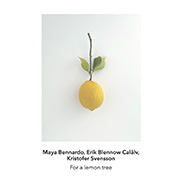 Maya Bennardo, Erik Blennow Calälv, Kristofer Svensson: For a Lemon Tree [Another Timbre]. You may remember Bennardo and Svensson teaming up with percussionist Etienne Nillesen for Improvisation on Āsthita, January 2, 2024. This time around, we hear Improvisation on Prakāśa, June 10, 2024, with Calälv on bass clarinet replacing Nillesen on drum; Bennardo and Svensson continue respectively as before on violin and kacapi (I looked it up, it’s a Javanese zither). Svensson has devised the distinct tunings used in each of these improvisation, on this occastion using 11-limit just intonation, a scheme that stretches outside the bounds of what Western ears would normally consider as “in tune”. The improvisers are set rules on what modes to play within the scale and an overall shape but are otherwise free to play as they wish. As with the earlier improvisation on Āsthita, its companion piece, the trio play within the mode more than upon it, but there are differences. The greater range and sustain of Calälv’s clarinet allows him to form the harmonic backbone of the piece, using the lower registers sparingly. Svensson’s muted zither plucks out tropes on the clarinet’s long tones, sometimes leading, other times elaborating, while Bennardo threads a translucent harmonic layer between the two. It sounds wonderfully composed, in either sense of the word, with each displaying an instinct for when to remain silent, giving the music greater definition beyond an ornate drone. To illustrate the point, the album begins with For a Lemon Tree, which is a distillation of their acquired technique into a formal composition.
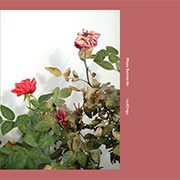 Maya Bennardo: rustlings [elsewhere]. The title could be a self-deprecating description of Bennardo’s style of playing, where she nudges her violin to the threshold of breaking up its tone into pure, whispering friction. Her two compositions here make use of this breathy style of bowing as a means of formal development, rising and falling between sounds that are nearly full of their pitch, to almost empty. The 23-minute dormant gardens i. is for violin and viola, played by the duo andPlay (Bennardo and Hannah Levinson). It resembles a horizon line cast with shadows in low sunlight, drawn freehand and rendered in long, feathered strokes. Small amounts of colouration and harmonising play over what strikes the listener as a single pitch which wavers and shimmers, establishing its presence through an apparent immobility that emerges through the constant microscopic activity. The work’s duration opens up the scale of this activity fom miniature to landscape, giving the small sounds greater seriousness. The 27-minute summer rustlings is Bennardo solo, the relatively dry acoustics exposing how little adornment there is to her playing other than through the sounds arising from within the instrument when subhected to her technique. On the microcosmic scale, there is plenty of technique to be heard. The piece falls into three sections with a coda: in the first she draws a line firm but pale, adding flecks of plucked strings to the constant, fragile bowing, figure and ground in the lowest possible relief. The second slowly breathes pitch into frail harmonics, nuilding up into fast arpeggios of high notes, still half whispered. The third is a long monophonic drone that then starts to generate a kind of internal polyphony out of the timbral changes in bowing technique, like a doubled voice. The coda is disarmingly simple. It’s a virtuosic work which impresses without feats of pyrotechnics or endurance.