 Huw Morgan: Melos [Sawyer Editions]. Life’s been a little crowded lately so I’ve been finding some breathing space. Huw Morgan’s Mostly Slow Organ Music recitals have been happening for a while now, featuring his own compositions amongst others. His Melos compositions have been spreading out across the country for ten years now: this album features organs from churches in Bristol, Dundee and Catford. They’re not exactly performances on the organ, but with the instrument; Morgan treats each iteration of the piece as a site-specific work, taking long samples of individual stops and composing them into a single chord that gradually transmorphs through electronic manipulation into a second chord. Extraneous sounds and impurities in the mechanism are preserved, and the sliding tones are too slow to be perceptible as the music’s subject. The result is a Zen-like drone, empty yet full, the well-composed sort that hold your attention without seeming to do anything. When you start to lock in on it you become fascinated by the near-imperceptible change in intonation and the multitude of sonic ramifications it brings about. Five versions are presented here, the shortest being eight minutes and the longest (twenty) being only an excerpt from a longer piece. Hopefully more recordings become generally available.
 Ben Richter: Dissolution Seedlings [Sawyer Editions]. The ensemble House on Fire consists of three musicians, at least in this instance; they play pianos, but also melodicas, a pump organ, percussion and a cello. Dissolution Seedlings is a nearly-hourlong work for this odd ensemble, divided into fourteen (“and a half”) movements. Offset against this information is the curious way the music dissipates its activity, marking out time more than passing through it. Richter speaks of rhizomes (more vegetal than anti-Oedipal) in his notes, but the piece struck me most as a way of finding music that endures past the point when all momentum has been exhausted. It reminded me a bit of Charlie Usher’s An assembly – a forty-five minute piece composed of a hundred-plus tiny fragments – but whereas that piece uses brevity as a means of negating substance, Dissolution Seedlings creates space and hesitates to fill it. Each movement is its own pause, where waiting is an end in itself. Small gestures emerge almost by default, and with each change of state from one section to the next, House on Fire does as much nothing as they can possibly sustain for the duration.
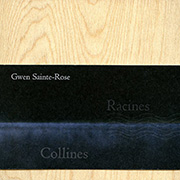 Gwen Sainte-Rose: Collines / Racines [By the Bluest of Seas]. No need for philosophising or head-scratching here. This is just Sainte-Rose straight up with a cello and a loop pedal. It’s bright and colourful and seems all so clean and simple, swear it’s all been done before but no direct comparison immediately comes to mind. That’s not the sort of thing you should be worrying about anyway when this is so pleasant to listen to. Sainte-Rose says she’s rhapsodising the Belgian landscape, but I think we can all invest these two long, drifty pieces with our own ideas of home.
 Marti Epstein: For Jack [Sawyer Editions]. The “Jack” referred to here is Jack Yarbrough, the pianist playing this long, solo work. Yarbrough’s been heard in a few other recent recordings, notably Timothy McCormack’s mine but for its sublimation, another work written for him. At that time, I wrote that “he has a gift for coaxing prolonged sounds out of his instrument”; that quality applied here too. Unlike the other pieces in this review, For Jack doesn’t exactly create mental spaces for contemplation, rather it crowds them out and then colours those spaces with its own, foreboding mood. For a long time, the piece dwells upon dark clouds of low chords, which ultimately burst out with sudden violence. Eventually, the mood breaks a little, opening into higher registers and more open sounds, but the chords are still dense and brooding until they finally fragment into slow counterpoint of higher single notes. My description makes it sound cheesy, but Epstein steers a steady course between cheap drama and cold process, making the progression seem intuitive and unforced. Yarbrough emphasises this with an interpretation which properly equates intuition with nature, merging the austere and forbidding with echoes of the pastoral.
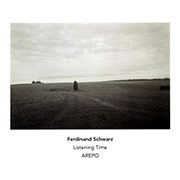 Ferdinand Schwarz: Listening Time [Another Timbre]. I don’t know anything about Schwarz and neither did the label proprietor before he heard this, it seems. A work for clarinet, electric guitar, accordion and cello, played by the AREPO ensemble, it’s an unexpectedly beguiling piece. Listening Time starts out self-effacing and innocuous but it grows on you after the first hearing. AREPO plays a single chord, its pace seemingly dictated by the clarinettist’s breath. Over each iteration, the chord spreads out a little but mostly it deepens, with subtle touches that hint at possible voice-leading. Without the need to “go” anywhere, composer and musicians settle into establishing where they already are and what that might entail. It’s a piece you need to listen into, much in the same way as the musicians of AREPO appear to. Schwarz describes as improvisation, petrified in time, and credits the AREPO musicians jointly with composition. The ensemble sounds perfectly matched to the piece, producing softly luminous sound as a single complex instrument, with the idiosyncrasies of the individual instruments sublimated into a greater whole.
Filed under: Music, Reviews by Ben.H
Tags: Ben Richter, Ferdinand Schwarz, Gwen Sainte-Rose, Huw Morgan, Marti Epstein
No Comments »
The return of 840 and a bonus Music We’d Like To Hear
Thursday 25 September 2025
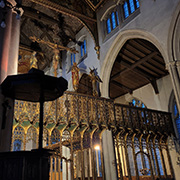 The 840 concerts in London were part of the long-vanished pre-Covid world and one which I had thought was gone for good, so it was a welcome surprise to see it resurrected with minimal fanfare after a five-year-plus hiatus. Can one go home again? Not exactly, as the concert last Saturday had relocated from their once-regular Islington haunt to St Cyprian’s, Clarence Gate. Otherwise, nothing seemed to have changed, with a programme that retained the same quietly reserved and very slightly precious mood that has become the series distinctive style. As usual, the instrumental forces were modest: works for two violinists and for piano duets. The gig began with the most prickly piece of the night, Marc Sabat’s Three Chorales for Harry Partch, a duet for retuned violin and viola. The earliest of his compositions, it draws on his career as a violinist and his study of microtonality to view Partch’s own use of microtonality under a microscope, creating a work of buzzing, vibrating slow-motion slewing, all subtones and doublestops. The two string players were Amalia Young and Anne Yin Han (apologies for not knowing which one played viola), who showed serious intent whether playing Sabat or arrangements of Diego Ortiz’s viol Recercades. The Ortiz pieces were interspersed through the night, having been arranged for violins by concert series curator Alex Nikiporenko. Co-curator Christian Drew indirectly echoed these pieces with his violin duet 17th Century Music, which struck me as a loose but airy collection of gestures toward the baroque era, minus the drive. (This is at least the second, possibly the third piece I’ve heard whose title riffs on Laurence Crane’s 20th Century Music – strange how influences can spread.) Darius Paymai’s sonnerie, air was another of the new pieces written for this concert and took a similar approach to Drew, this time giving Satie the languid treatment. The strongest of the new works was Nikiporenko’s Thread, an affecting violin duet that gained effect through taking intimate personal and sentimental inspiration to produce music that was securely woven together yet always translucent. The two pianists were Jay Austin Keys and Fernando Yada, who presented a suitably sensuous interpretation of Linda Catlin Smith’s Velvet which seemed to focus on the immediacy of touch ahead of overall shape, and a suitably dense version of Egidija Medekšaitė’s Textile 1 which reduced differentiation in the ever-changing small differences of interplay into a tight, seamless surface. The final work combined violins and pianos, James Creed’s Plain Song using sustained tones from an e-bow on the piano strings over which the musicians would sparingly add one or two notes to harmonise on the faint outline of a song.
Creed also began the evening’s music, earlier at St Mary At Hill, at a free matinee concert given by Music We’d Like To Hear as part of London’s Open House weekend. Some curious punters who attended were quietly bemused by the works presented, a typically eclectic mix combining rarefied sublimities and literal piles of junk. Creed’s piece Lomond was written about five years ago but used the same method of Plain Song, this time producing faint traces of Loch Lomond out of the piano strings’ resonance. This time, the concept behind the work seemed to hold the piece together better. The programme was curated by Laurence Crane (q.v.) and featured the “GSMD Experimental Music Workshop and guests”, including Tim Parkinson and Angharad Davies. A scene from Parkinson’s opera Time with People (written about here earlier) was presented, performers crouched over small piles of aforementioned rubbish and producing a surprisingly broad palette of sounds from them as they muttered stop-start in unison. It made the following performance of Pauline Oliveros’s Rock Piece sound strangely monochromatic by comparison. John Lely’s Symphony No. 3: The Parsons Code for Melodic Contour is a near-unison work of blunted melodic obstinacy; the occasional deviations out of tune should undermine its solidity but instead just make it seem more threatening. Conversely, a rerun of Amber Priestley’s woozy derive Did not feel very well at skool (31/1/1977) became insidious by its dissipation, with the musicians scattered around the hall brewing up a thin but ominous musical miasma.
Filed under: Music, Reviews by Ben.H
Tags: Alex Nikiporenko, Amber Priestley, Christian Drew, Darius Paymai, Egidija Medekšaitė, James Creed, John Lely, Linda Catlin Smith, Marc Sabat, Pauline Oliveros, Tim Parkinson
No Comments »
What Is Going On
Monday 22 September 2025
 Olly Sellwood: Charlene from Big Data and other stories [Surface Press]. Up front is Peter Falconer’s narration, backed by the duo of Eva Zöllner and Heather Roche on accordion and clarinet. Falconer makes for an engaging raconteur, giving each of these half-dozen five-minute vignettes much-needed expressiveness and lucidity, despite the tricksy overdriven autotune threatening to smother him and make him hop about like a marionette. The Zöllner-Roche Duo are delightfully agile, seemingly unencumbered by tech and switching on a dime from one caricature to the next and hitting their dramatic marks with pinpoint accuracy. In the background, the music is composed by Olly Sellwood and the texts are written by Rose Biggin and Keir Cooper. I am not a fan of this sort of thing: the whole exercise is shot through with that particular British style of apologetic jokiness that makes a virtue out of pulling its punches, which I find irritating. I haven’t gone back to check but I would be surprised if Falconer doesn’t actually say “mustn’t grumble” at some point. Much of the zeitgeist (the autotune, the tales of frustration with automated customer help lines) is five minutes ago, but the whole thing is almost entirely redeemed by many of Biggin’s and Cooper’s stories turning in upon themselves from the absurd to the oblique, becoming more interesting as they make less sense. And Sellwood’s instrumental writing maintains the humour without resorting to stunts, accordion and clarinet providing lively backgrounds and interested commentary, somehow sounding more than the sum of their parts.
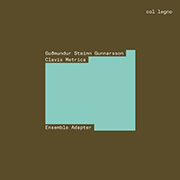 Guðmundur Steinn Gunnarsson: Clavis Metrica [Col Legno]. The latest dispatch from planet Gunnarsson reveals more details while deepening the mystery of this singular oeuvre of compositions. As when learning a new language, the moment-by-moment activity seems inscrutable and at first undifferentiated, but patterns start to appear; those patterns in turn present a new challenge to the listener. Clavis Metrica is a vividly recorded work from 2022 performed by Ensemble Adapter, a group of four musicians without direct participation of the composer. A large-scale work comprised of eighteen sections, featuring flute, clarinet, harp and the signature array of rattles, whistles and harmonicas, it gives you the opportunity to immerse yourself in the sounds and discern a suggested outline of the intricacies of their ebb and flow, fighting the impulse to analyse everything like an ethnomusicologist. Listening to this, some things came to mind. First, stop hearing those rattles and whistles as extraneous texture. Second, reading into the background of the piece made me realise that I had missed something that should have been obvious to me from the start. Gunnarsson’s use of mobile, animated notation had a motivation beyond openness of structure and detailing; it’s about rules which are understood without being codified. Writing about Clavis Metrica, Gunnarsson discusses his experience of Icelandic versification and how it is felt through poetry, folk balladry and debate. This summary is a rough approximation of certain points, all to do with the pervasiveness of verbal poetic meter through lived experience of spoken communication, exchanged through a system of rules applied with greater or lesser formality. I’d somehow neglected this despite my introduction to Gunnarsson coming from hearing his orchestral piece Sporgýla all those years ago. The fluidity of structure, the informality of the instruments, with each piece he’s trying to achieve a heightened form of conversation. The only downside to this release is that it’s on the very serious Col Legno label so you don’t get the funky cover art that adorned Gunnarsson’s previous releases.
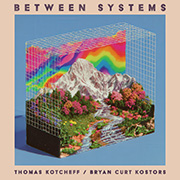 Thomas Kotcheff & Bryan Curt Kostors: Between Systems [Post Tonal]. Disgusting. Old farts will remember the new millennium’s brief fad for “remixing” Steve Reich, an exercise as fatuous as wallpapering the Eiffel Tower. As another sign that things have only gotten worse, pianist Thomas Kotcheff has teamed up with Bryan Curt Kostors on modular synths and various electronica to produce a set of chill-out mixes of pieces by Morton Feldman and John Cage. The Feldman pieces are brief solo piano works from the early Fifties: all five Nature Pieces are played, some with “Beats”. The piano is “Glitched”. Sounds are backmasked, harmonic layers are expanded and each piece’s “growing energy” and “climax” are heavily underlined with various safety colours for the benefit of those too thick to hear much of anything when subjected to the original. I’ve never felt so confident that I’m not a fuddy-duddy as when I say that this sucks; not because it’s trying something new but because that new thing is a dull parody of clueless newness for its own sake. Not just that it’s uninspired, but it’s airily dismissive of the actual music they’re interpreting, as though Feldman and Cage are blank canvases for Kotcheff and Kostors’s doodling. (The sleeve notes come with “Track Narratives” which detail the process used to treat each track, reading much like the menu at a pretentious eatery describing how they’ve seasoned your pulled pork. I’ve also learned that “Nature Piece 4 is among Feldman’s most popular works”.) For the rest of the album, the pair appear to have run out of ideas and settle into treating all the resonant pauses between Intermission 3 and Intermission 5 as free space to fuss and fidget about in like an unwitting toddler at Wigmore Hall. They do the same fidgeting for two Cage pieces: with tedious inevitably, they are Dream and In A Landscape, a pair of works subjected to so much midwittery over the years I have come to almost hate them.
Kotcheff made a fine recording of Rzewski’s Songs of Insurrection not too long ago, which just makes things worse as he should know better. This LP isn’t out till next week so I don’t have a link to where you can buy it; instead I’ve link to the promo for last week’s launch party in LA. We’re asked to “think of Tony Bennett’s rendition of The Beatles’ “Eleanor Rigby””, although I don’t recall Bennett attempting to beatbox on it. The programme also credits Celine Dion with writing “The Power of Love”.
Filed under: Music, Reviews by Ben.H
Tags: Guðmundur Steinn Gunnarsson, John Cage, Morton Feldman, Olly Sellwood
1 Comment »
End Of Summer Noise Round-Up 2025
Sunday 7 September 2025
It’s strange to reflect that listening to all the records below has given me a pleasant feeling of nostalgia. Not that any of this music is old-fashioned as such, although it could be true that the musicians are rediscovering a prior generation and assimilating the lessons of that time into modern practice: it goes around in cycles, never quite the same each time. I think it’s that there’s a kind of exuberance found in a lot of this stuff that had been tamped down in previous decades, with freewheeling exploration that’s unconcerned with accidentally revisiting what has been done before, caught up in the feeling of doing something new. This taps into reminiscences of youth, when the inner creative world suggested boundless potential.
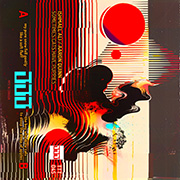 Ishmael Ali / Aaron Quinn: Sometimes Cats Have Puppies [Tripticks Tapes]. A lot of free improv is like jam bands: good ones can be fun when heard live but don’t feel rewarding when heard on record. This duo plays cello and guitar, an unusual combination which doesn’t seem too promising but redeems itself because it never really sounds like what it is. Not that they attempt to disguise themselves; Ali goes for depths of timbre on his cello and Quinn sticks mostly to pointillistic effects with minimal noodling. They are also beset by samplers to disrupt their comfort zone and use digital synthesis to noisy and occasionally startling effect. This is all recorded from a live date so the spontaneity is on-point and the inventiveness of their sounds makes up for the lack of form.
 Javier Areal Vélez: Trifasica [Strlac]. A guitarist makes the move from their tired old axe to pure laptoppery. This is all Max/MSP and Ableton Live, apparently, coded with a partly-automated sequencer that adds a hefty element of generative composition to each of the brief essays. You can listen out for signs of guitarist influence, which you’ll mainly hear in the percussive stuttering (no, not like Oval). The sounds get chopped into fragments of irregular rhythm, occasionally letting something more than a beat seep through and wash over the barrage of loops. It’s a promising start; the blunt loops could get wearying after a while but keeping it down to five tracks in eleven minutes should be OK.
 Gaudenz Badrutt: Palace [Bruit]. This has started to grow on me, thanks to the depths of its conceptual premise and construction. A two-movement composition of collaged sounds and music compiled across several years, Palace combines music (Badrutt playing Ives, Cortot playing Chopin), electronic noise, personal recordings including Badrutt’s young daughter) with heavy processing to create what aspires to be “symphonic density”. Like an Alvin Curran collage but with an emphasis on mood and overall effect over detail, Palace hits first as a work of textural ambience, one which never gets cluttered or opaque, then starts to reveal its fleeting moments little by little.
 Ilia Belorukov & Lauri Hyvärinen: Fix it if it ain’t Broken [Nunc]. Hyvärinen, recently heard on the cutting set of electric guitar duos with Jukka Kääriäinen Pulled Apart by Horses, pairs up with Belorukov’s modular synth. The shredding is more literal than usual, with Hyvärinen making extensive use of sampling pedals to feed his guitar into various mangling digital effects while Belorukov produces slabs of quasi-analogue noise. At times the guitar seems to act as a foil to the synth, or the two trade different flavours of electronic distortion, but in the final track Hyvärinen gets his revenge as the two take turns exchanging blows.
 Ilia Belorukov / Nenad Marković: Signs of Suspicious Activity [Hera Corp.]. Belorukov’s modular synth again, this time with… trumpet. Marković is an equal match to the task, upsetting the balance by providing the white noise through various mutes to run interference on Belorukov’s loosey-goosey rambling on the opening track. Later they fall in together to produce some brooding, densely coloured scenes, but never get sombre enough to dispel the idea that one of them could take off at any moment, with either overdriven analogue feedback or a maundering semi-vocal line. The end duet is particularly fine, spinning out a wonky elegy where it’s never entirely clear which instrument is which.
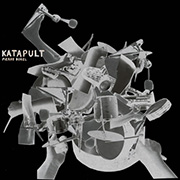 Pierre Borel: Katapult [Umlaut]. A set of jerky improvs for sax and drums, except that Borel’s been working intensively on playing both instruments at once. This one’s a bit of an outlier as there are no electronics involved, but I figure one-man-band counts as noise. A set of rules (left hand, right hand, etc.) guide how each instrument is to be deployed, a stricture placed upon an already limited combination that forces Borel into a more structured way of more thoroughly exploring what reduced potential exists. It gains seriousness as each piece drills down into the subtleties hidden inside such a simplistic formula, making for a curious little LP that’s not as fucking horrible as you first feared.
 Jorge Espinal: Bombos y cencerros [Buh]. Guitarist Espinal plays bass drum, cowbell and sampler all simultaneously (not again!) with his usual axe. The samples are mostly percussion, both latin and drum machine, with all the pieces having a strong emphasis on overlaid incongruous rhythms (yes, again). Despite my unfortunate phrasing, this is not a derivative set of pieces, even as they twist ideas of “Latin” into alien thuds and burbles. The polyrhythmic idea is so distorted into something new that anyone ignorant of Latin American music (raises hand) won’t suspect it’s there. While that’s going on, Espinal sneaks in some witty blunt-fingered take-offs of more fluid guitar-pickers, but I won’t saddle him with the sobriquet of the Peruvian Eugene Chadbourne. Unless he also makes dick jokes.
 Beat Keller & Jukka Kääriäinen: Birds of All Kinds [Bokashi]. Kääriäinen, recently heard on the cutting set of electric guitar duos with Lauri Hyvärinen Pulled Apart by Horses, pairs up with Keller on second guitar. I know Keller only from his set of small, enigmatic string trios on Wandelweiser so it’s nice to hear he can make noise with the best of them. These are short, atmospheric live improvisations which nevetheless don’t stint on technique. Both use their guitars and effects as conduits, to direct and shape the sound they send flowing down the line to their amps. As the title suggests, plenty of feedback and harmonics but used as a jumping-off point to create something new. The thorough workouts are contained within short tracks to aid concentration. They’re not averse to getting rowdy at times, and occasionally will pluck notes on the strings.
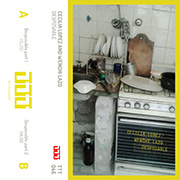 Cecilia Lopez and Wenchi Lazo: Desposable [Tripticks Tapes]. Some more weirdo synth noodling and what sound like electronically drenched drums but are apparently produced on a drum machine. The synth patches chatter away amongst themselves, held together by a drum machine that drifts out of noise and into something uncanny; it sounds that way probably because the drum patches eschew the usual kick bass and hi-hats for resonant but trebly snares and traps, with occasional excursions into off-grid rolls. After a while it all coalesces into sort of a riff that sustains the momentum, before falling apart again as the musicians switch roles. The flip side offers am alternative take on the same, with the difference being on how long it takes to get into the groove.
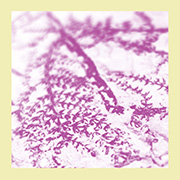 J.L. Maire / Alfredo Costa Monteiro: Estelas [Hera Corp.]. Monteiro’s earlier solo work Suspension pour une perte was relentlessly sombre, an impression initially sustained here by the invocation of tombs and monuments. For this album he works with Maire on analogue synth with electronics and opens up the soundworld to greater effect. This is a pair of fearsome soundscapes, sufficient variety in coloration and texture to make them all the more momentous. The reverb is heavy but provides a sense of space and distance, the first track in particular sustaining monumental presence with an added chill of foreboding. The second piece is arguably looser, adding greater diversity of sounds to produce more drama at the expense of consistency.
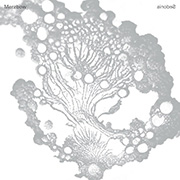 Merzbow: Sedonis [Signal Noise]. I’ve heard of this guy. For my whole life spent in Ugly Music, Merzbow has been ubiquitous to the point of inevitability and so, much like trouble, I’ve never bothered to seek it out, figuring it would come to me sooner or later. Thankfully this has never happened until now and I’m glad it’s Merzbow who found me first. Someone’s gonna pipe up and say it’s not a patch on some of his other 9000 albums but I really liked it. He’s got protean, impulsive noisemaking down to a finely balanced skill, with Sedonis serving up dense sonic tableaux that are simultaneously bombastic and intricate. The multilayering overwhelms you with complexity and information overload, instead of bludgeoning you with excess.
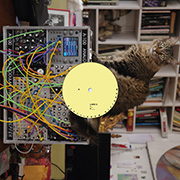 Mauricio Moquillaza: Mauricio Moquillaza [Buh]. Ey up, it’s another Peruvian. The Buh label has been sending me these so expect to read more about them in the future. Haven’t looked up anything about Moquillaza’s background but this is his first solo release. Four works for modular synth which ease back and forth in a disconcertingly nonchalant fashion from energetic sequencer burbles to washes of abrasive noise. By the last track, when he almost fully embraces space rock which has been implied all along, it feels less like settling into a comfort zone and more like finding a new destination. It all sounds very experienced and polished, but apparently each track is a single take.
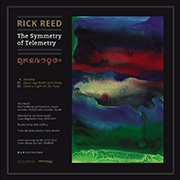 Rick Reed: The Symmetry of Telemetry [Elevator Bath / Sedimental]. I’m told Reed is a veteran of the Austin experimental scene in Texas and there’s an old-school feeling to the three electronic works presented here. Composed around 2020 using Buchlas and Moogs, the sounds have fuzzy edges not heard in typical digital soundfiles. Reed uses a subdued colour palette throughout (don’t let his artwork on the cover foll you) and everything sounds a bit muted and distant. Seemingly going for ambient mood, yet each piece progresses according to a pulse that’s a little too neat, which stunts the effect. Each of the two longer works ends with snatches of radio speech mixed into the background, making the whole exercise sound a little tired.
 Tetrao Tetrix: Nyctalopia [Bruit]. Gaudenz Badrutt returns, joined by Jean-Luc Guionnet on alto sax and Frantz Loriot on viola (huh?). It’s improv I guess, with some ground rules and a focus on the quality of sound over matters of phrasing, structure or texture. The most notable aspect is the presence of silence, pervasive throughout and implicit as a ingredient to the mix even when all three are playing. This what transforms each of the six tracks away from the sound of musicians playing to that of electroacoustic composition, particularly in the earlier parts where the three work together as a single force. By the end the overall intention remains, but the emphasis shifts to each playing for themselves, which in this context feels like losing control.