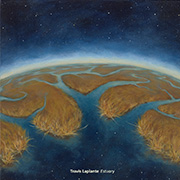
 Travis Laplante: Estuary [Carrier]. “All sounds on the album are full exhalations through the tenor saxophone.” I don’t know how he’s put them together, but each of these two pieces were recorded in separate, single sessions. First track Blue Fire glides and buzzes like a bowed electric guitar, alternating between dark and light, with Laplante using overblowing to produce the requisite distortion. The title track sounds more traditional – I’m assuming droney saxophone pieces qualify as a tradition now – with light and floaty sounds, almost ethereal except that the breath gives enough body to remind you of Laplante’s physical presence. A good album if you are leery of saxophones.
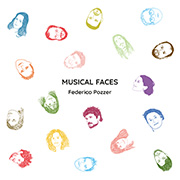 Federico Pozzer: Musical Faces [New Portraits]. A definition of the ephemeral, a set of nineteen one-minute pieces, each for a different soloist, and each piece is little more than a scattering of dust. Pozzer has drawn a face of each friend over a sheet of musical staves and then erased it almost entirely, leaving behind a few slivers of unresolved marks. In each piece, the subject is the performer, their instruments ranging from voice and violin to drum machines, field recordings, sine waves, pen and paper. At this scale, the insubstantiality becomes the substance itself, an elusive quality as each musical moment is so fleeting, with no scope for continuity. It invites instantaneous, momentary listening, even while raising questions over how much faithful the performers are to the score: can they interpret their own erasure objectively? A strange album, especially considering I know Pozzer only for his album on Another Timbre.
 Bruno Duplant: athanor [Dissipatio]. Didn’t expect this from Duplant. This time he’s playing an organ with “electroacoustic devices”: they’re drones, I guess, but the first track sublimation is extraordinarily dramatic, with orchestral swells that transform the nature of the piece section by section, chanting choirs and a range of expression quite unlike other works I’ve heard by him. Second track éternité fits into a more conventional drone genre but still contains enormous depth and detail in its densely-packed ambiance. The final track albedo seems more aggressively minimal at first, with bass organ tones held beneath what appears to be a sort of automated hurdy-gurdy that loops and buzzes on metallic strings. The interaction between the two becomes fascinating, austere and intricate all at once, but then it falls away into an extended coda of a keening solo. An unusual album that plays with your perceptions of sound and genre.
 Àlex Reviriego: Huesos de corceles exhaustos [self released]. Didn’t expect this from Reviriego. Where’s the guitar? More electric organ and “electronic devices”, this time producing a triptych of evocative, slightly creepy mood pieces. Nice handling of tone and blending of sounds, stretching to some icy melodic figuration in the first track. After a shorter interlude, the concluding title work starts to either decay or sprout into something both more abstract and organic, with hints of unstable noise held in restraint. There’s even a little guitar, almost unrecognisable. The brief, allusive sleeve notes suggest that this was indeed composed intuitively, with a kind of dislocated subjectivity taking hold, which might explain why it can have a strong effect on the listener’s emotional responses.
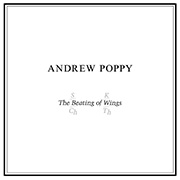 Andrew Poppy: The Beating Of Wings (40th Anniversary Edition) [False Walls]. An album that’s too ingrained in the foundations of my aesthetic understanding for me to say anything critical about it, so I will merely note the pleasure it gave me just to hear that it has been reissued. I haven’t played this new edition, because it’s running through my head while I’m writing. Looking back, it signalled that “minimalism” as it was then understood had become a point of origin, which could be taken in multiple directions. That’s precisely what Poppy proceeds to do in these four pieces, while retaining a clear compositional voice of his own. It gives the music unusual resilience: it was catnip back in the day for precocious highschoolers from whom the rest of the Zang Tumb Tuum catalogue wasn’t quite pretentious enough and yet has aged better than anything else on that label. The Anniversary Edition consists of a remaster (shrug) and no bonus material such as demos, false starts or invaluable snippets of the engineer saying “rolling on one”. Christ I’m old.
Filed under: Music, Reviews by Ben.H
Tags: Àlex Reviriego, Andrew Poppy, Bruno Duplant, Federico Pozzer, Travis Laplante
No Comments »
Federico Pozzer: Breaths
Tuesday 8 October 2019
 Been listening to this repeatedly over the past couple of months but not writing about it; just enjoying it*. Don’t know anything about composer Federico Pozzer, other than what comes with this CD. Breaths is a collection of three pieces for small groups of instruments that take composition into that nebulous world of improvisation, but in a different way from the usual connotations. Pozzer describes his early musical interests as starting with free improv before switching to Feldman, Bunita Marcus and Cage. This gives a superficial idea of what this disc sounds like, particularly the late works of Cage.
There was a short period in his last years when Cage became interested in the idea of a musician’s “internal clock” being a sufficient regulator and coordinating factor of musical time. This notion seemed to fade pretty quickly, briefly flirting with mutual supervision before giving over wholly to the impartiality of the stopwatch. I’m not aware of any “internally timed” performances of Cage’s orchestral piece 1O1 having taken place, but given his history of working with orchestras I suspect he would have been disappointed. Where Cage apparently failed, Pozzer clearly succeeds: the musical material is more or less defined, with the manner of playing determined by the musician’s breathing.
The disc opens with Breath II, a half-hour duet for guitar and piano played by Lucio Tasca and Pozzer, recorded in the composer’s living room in 2017. Each musician plays a single gesture with each inhalation, exhalation, and pause between. The piece is structured, with repeats and an emphasis on ninth intervals that makes the opening resemble the start of Schoenberg’s Opus 11. Each musician, however, plays independently and the sonic palette soon expands into percussive and frictional sounds. In the abstract, the ostensibly regular pulse of breathing would make a recipe for tedium, but the induced self-awareness and the interaction of sounds produces a strange effect on how the musicians breathe. Time slows down. The music ebbs and flows intriguingly, a variegated mosaic of sounds that seems larger than the two instruments.
For the two other pieces, Tasca and Pozzer are joined by Kathryn Williams on flute, Dejana Sekulic on violin and Brice Catherin cello. Noises and Meetings are also regulated by breath, in slightly more involved and interactive ways. Noises requires the musicians to play in an open space, responding to external sounds heard with a given set of possible reactions. In this recording, the ensemble plays in a delicate, serious way that never seems too self-conscious or too “free”, either of which would make the music arch and stiff. It works here, and shares the ambient field recording atmosphere of Breath II that gives these pieces their own subtle colouration.
Meetings also allows extraneous sound into the music, as the musicians are, at times, required to respond to each other’s breathing instead of their own. The simple scales played by the ensemble become blurred by the overlapping interplay of each performer’s bodily rhythms, concentration and intuitive communication. As an act of collective consciousness, it takes the concepts heard behind Christian Wolff’s ‘consensus’ pieces and elaborates them into something simultaneously more corporeal and more ephemeral.
* Last couple of months have been kind of hectic so not enough writing going on. Soon to change.