 Jules Reidy: Clerestory [Thrill Jockey]. Reidy continues to develop a subtle but sophisticated form of tonality in the two pieces paired on this album, all originating from the unprepossessing source of playing acoustic guitar. Clerestory follows on from Instants & Their Echoes, further expanding the palette of sounds while keeping a coherent but pronounced concept of tuning. The first piece is Shadow Symmetric, commissioned and performed by the JACK Quartet as a result of their recent round of workshopping sessions. A straight-up, unadorned acoustic quartet, in which Reidy builds upon a simple, harmonious texture by alternating between two sets of just intonation scales, each fairly normal in themselves but with enough divergences between them to create a perceptible tension between consonance and dissonance as the Quartet moves from one chord to the next. The steady pace, evenness of dynamics and lack of vibrato suggest a concert of viols, and the slightly grainy, rusticated harmonies add to the impression of music arriving from somewhere outside of time. The JACK musicians know their just intonation and don’t need to make heavy work of hitting the unusual pitches specified by Reidy. You could crank it up to get the full effect of the strange harmonics but it works better as a quiet piece, seemingly still on the surface but faintly bustling in its depths.
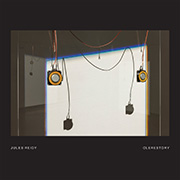
Clerestory Windows is the counterpart, where material from the quartet is repurposed into a fixed media work for various electronics, complemented by Reidy’s guitar. The inspiration comes from a sound installation for transducers attached to suspended panes of glass, and so the piece is a set of shadowy, translucent echoes of the original. MIDI instruments produce the pitch-perfect harmonies in thin, glossy tones, slightly off-putting in their falsified timbres – it’s a nice homage to a previous generation of musicians working with microtonality. Later, some early digital synths recover some of the material, adding to the nostalgic futurism. This suite of inventions on the quartet’s material are given substance by the intervention of Reidy’s signature steel-stringed acoustic guitar, with playing that is simple and direct but dazzles with the glittering timbre of the strings. The lightness and brightness come as part of the mediation between real and virtual sounds, creating a double image where the electronics are both a representation of the harmonic sonorities and its embodiment.