Vilhelm Bromander: aurora [Warm Winters Ltd.]. Well this is all quite lovely. I think I found its charm truly ineffable and so refrained from trying to write anything intelligent about it. A suite of short pieces for a septet of winds, brass, low strings and pump organ. The modesty of its expression comes from the quiet formality of its presentation and the slightly scuffed ensemble playing in its execution. Subversive in its self-effacement, rather like those new British composers from the 1970s. In fact, the musicians here are mostly playing instruments unfamiliar to them: Bromander for example usually plays double bass, as heard on the equally surprising ...for some reason that escapes us. Here, he’s on soprano sax and organ duties. They’re not the Portsmouth Sinfonia, but as they ring the changes on these cascading chorale-like pieces, they do evoke the dignified amateurism and communal pride that the Scratch Orchestra aimed for.
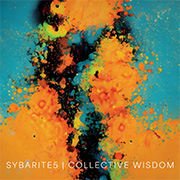 Jackson Greenberg: Apartments from Sybarite5: Collective Wisdom [Bright Shiny Things]. Throwing out a pile of emails I found Greenberg’s The Things We Pass On Through Our Genes from 2023, a piece which started out as a string quartet recorded in 2012. Ten years later Greenberg fed the recording through effects pedals and other processes, playing through the piece live to tape. The sleeve notes say it was therapeutic, and the spontaneity of the treatments can diminish the uncanny quality that sometimes emerges in favour of raw texture, leaning into authenticity over more profound communication with the listener. More effective is Apartments, a 2023 composition for string quintet with tape loops and live AM radio, played with poignant wistfulness by the ensemble Sybarite5. The radio inevitably creates a melancholy mood, something familiar yet distant and unattainable. The simple part for strings supports the elegiac and reflective atmosphere, while delicate flourishes of electronics act both as alienation and enhancement of the feeling of emotional displacement. Made to be played while looking out the window on a rainy day.
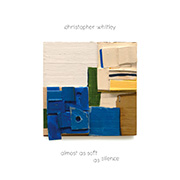 Christopher Whitley: almost as soft as silence [self-released]. Critics (me) could get in a cheap shot about Whitley thinking too hard when commissioning violin pieces, going by his adventurous if flawed Describe Yourself from a few years back. I should point out that he followed it up with an album going the opposite direction, by simply playing with as little thought as possible. The fifteen tracks on the sub-thirty minute almost as soft as silence are the merest slips in the wind, blowing past the ear with felicitous facility. Title track excepted, nothing feels fragmentary or self-aware about form (no deconstruction here) as each piece is absorbed by technique while seeming to be effortless. Pleasant to an almost baffling degree, and it’s only in the last track you feel you’ve heard something substantial. It all sounds lovely, what with Whitley being darn good and the instrument a loaned Stradivarius, which I suppose obliges him to play nice.
 Jeff Kimmel & Jack Langdon: The other side of the air [Dinzu Artefacts]. I’ve just been listening to a few releases by Low Impact, including Jeff Kimmel’s In Plain Sight and Exhausted Mechanisms by Kelley Sheehan and Jack Langdon. Both were a little fiddly for my tastes, but I remembered those names: early last year Kimmel and Langdon released The other side of the air, a set of duets for clarinet and organ. It’s one of those cute little miniature pipe organs, matched by Kimmel playing clarinet with as little affect as possible. The whole thing was recorded in one session. In the first piece, Langdon plays chords without quite enough air, adding microtonal shifts as the intonation falters, rubbing up against the slow, careful clarinet melody. For the second piece they shift to suspended unisons, where the beating frequencies and halos of overtones become foreground material. From here and for the rest of the set the two spread out to explore the same phenomena in wider pitch ranges and discovering new timbres along the way. Between the two of them they may sound like a recorder ensemble, a chorus of ocarinas or a blown set of bottles, building up these pallid but unstable colours to create fascinating variety from increasingly immobile playing.
Filed under: Music, Reviews by Ben.H
Tags: Christopher Whitley, Jack Langdon, Jackson Greenberg, Jeff Kimmel, Vilhelm Bromander
No Comments »
...for some reason that escapes us
Monday 18 November 2019
 I got sent this a while back and it keeps popping up on my stereo and I to go look up what it is. It keeps reminding me of other things but is clearly not any one of them. Mostly sustained chords, slightly wheezy, like a faded memory of lost mediaeval music as played on a hurdy gurdy or reed organ. A more sedate version of the latest Pancrace release or a more sombre work by Viola Torros. Despite the more restricted palette, it gets weirder when I remember how it’s made. Vilhelm Bromander plays double bass while Fredrik Rasten plays guitar, both usually bowed in some fashion. Harmonics and overtones combine in strange ways to colour what would otherwise be thin harmonies, usually confined to the middle range. Both sing as well, just faintly, which adds a glassy hum of beating frequencies.
...for some reason that escapes us presents two brief chorales, each followed by a longer work. It all seems carefully worked out, rather than a purely improvised experience. This comes off well, both in the restraint in their playing and the concision of each musical statement: the longest work is in three movements yet doesn’t crack twenty minutes. The scale and the pacing make you take on board each small detail as a compositional element, instead of simply immerse yourself in drone.